Introduction to Corporations: US Tax Treatment and Business Entity Overview

Key Takeaways
- Corporations provide the strongest liability protection
- C corps face double taxation at 21% corporate rate
- Most flexibility for growth and raising capital
- More administrative requirements than LLCs
U.S. Corporations Overview
A corporation is a separate legal entity providing the strongest liability protection. It can enter contracts, own property, and sue or be sued independently of shareholders.
Corporate Taxation
C corporations pay tax at the corporate level (21% federal) and shareholders pay tax again on dividends (double taxation). Corporations have tools to manage this through salary payments and retained earnings.
Growth Flexibility
Corporations offer the most flexibility: multiple stock classes, institutional investors, IPOs, stock options. This comes with more administrative requirements — meetings, minutes, board governance.
Frequently Asked Questions
Can a foreign national form a C corp?
Yes. Unlike S corporations, C corporations have no restrictions on shareholder nationality.
Never miss an IRS deadline
Get free email reminders for Form 5472, state annual reports, quarterly estimated tax, and OBBBA rule changes — built for foreign-owned LLC owners. No spam. Unsubscribe anytime.
We respect your privacy. No spam, ever.
Need to file your foreign-owned LLC return?
Skip the CPA bill. Our guided wizard builds your IRS-ready filing package, step by step.
Includes its walkthrough video pack
Start filing →
Ask the AI tools, free
Tax Return Drafter, Catch-Up Planner, Form Reviewer, IRS Notice Decoder — purpose-built AI tools, no signup needed.
Free tier · BYOK Anthropic/OpenAI for power use
Browse tools →
Starting your foreign-owned LLC?
Vetted partners we use ourselves: doola & Firstbase for formation, Mercury for banking, Alohi for IRS faxing.
No-fluff recommendations, no Northwest
See partners →
More on Business Entity Types
 8:10
8:10C Corp vs S Corp Tax Basics: Corporation Taxation Explained
 3:38
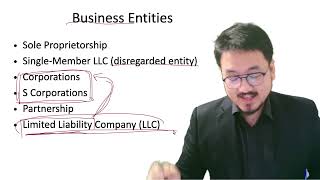
3:38Introduction to LLCs: What Is a Limited Liability Company? US Tax Explained
 3:38
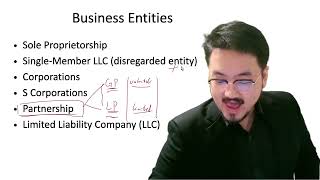
3:38LLC Taxes Explained: How LLCs Are Taxed by the IRS (Complete Guide)
 4:45
4:45Partnership Taxation Explained: How the IRS Taxes Partnerships
 8:39
8:39Sole Proprietorship Explained: Taxes, Pros and Cons You Must Know
 4:45
4:45