CP2000 Notice Explained: Why the IRS Sends It and What It Means

Key Takeaways
- A CP2000 is a proposed adjustment, not an audit — but it requires prompt attention
- Most CP2000s result from income reported by third parties (employers, banks, brokers) that does not appear on your return
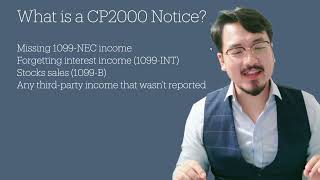
- Common triggers: missing 1099-NEC, forgotten bank interest (1099-INT), unreported stock sales (1099-B)
- The IRS uses automated matching programs to compare your return against third-party information
- Not reporting income does not prevent the IRS from learning about it
Understanding the CP2000 Notice
A CP2000 notice is a letter from the IRS indicating a discrepancy between what you reported on your tax return and the information the IRS received from third parties. It is not an audit — it is a proposed adjustment. However, it should be taken very seriously and dealt with promptly.
The most common reason for receiving a CP2000 is underreported income. The IRS compares your return against information returns (W-2s, 1099s, etc.) filed by employers, banks, brokerage firms, and other payers. When the numbers do not match, the IRS sends a CP2000 to propose adjustments.
Common Triggers for CP2000 Notices
Several types of income frequently trigger CP2000 notices. Missing 1099-NEC income from freelance or contract work is common — your client reports the payment to the IRS, but you forget to include it on your return. Forgotten interest income (1099-INT) from bank accounts is another frequent cause, as banks automatically report even small amounts of interest.
Stock sales reported on 1099-B from brokerage accounts are also a major trigger, especially when taxpayers report cost basis incorrectly or omit sales entirely. Other common sources include unreported dividend income (1099-DIV), retirement distributions (1099-R), and gambling winnings (W-2G).
How Third-Party Reporting Works
The IRS receives copies of most information returns electronically. Employers file W-2s, banks file 1099-INTs, brokerages file 1099-Bs, and clients file 1099-NECs. The IRS then runs automated matching programs to compare this third-party data against your filed tax return. When discrepancies are found, the CP2000 notice is generated automatically.
This means the IRS often knows about your income before you even file your return. Simply not reporting income does not prevent the IRS from discovering it.
Frequently Asked Questions
Is a CP2000 notice the same as an audit?
No. A CP2000 is a proposed adjustment based on automated matching of third-party information returns. It is not a formal audit. However, if you disagree and cannot resolve the issue, it could potentially escalate.
What is the most common cause of a CP2000 notice?
The most common causes are missing 1099-NEC income from freelance work, forgotten bank interest income (1099-INT), and unreported or incorrectly reported stock transactions (1099-B).
Never miss an IRS deadline
Get free email reminders for Form 5472, state annual reports, quarterly estimated tax, and OBBBA rule changes — built for foreign-owned LLC owners. No spam. Unsubscribe anytime.
We respect your privacy. No spam, ever.
Need to file your foreign-owned LLC return?
Skip the CPA bill. Our guided wizard builds your IRS-ready filing package, step by step.
Includes its walkthrough video pack
Start filing →
Ask the AI tools, free
Tax Return Drafter, Catch-Up Planner, Form Reviewer, IRS Notice Decoder — purpose-built AI tools, no signup needed.
Free tier · BYOK Anthropic/OpenAI for power use
Browse tools →
Starting your foreign-owned LLC?
Vetted partners we use ourselves: doola & Firstbase for formation, Mercury for banking, Alohi for IRS faxing.
No-fluff recommendations, no Northwest
See partners →
More on CP2000 Notices
 1:48
1:48Responding to a CP2000 Notice: Step-by-Step Guide
 10:10
10:10Worst-Case CP2000 Scenario: What Happens If You Ignore It
CP2000 Foreign Income Mismatch Guide
CP2000 Foreign Income Mismatch Guide for International Taxpayers (2025-2026)
CP2000 1042-S and Treaty Response Guide
CP2000 1042-S and Treaty Response Guide (2025-2026)
 4:28
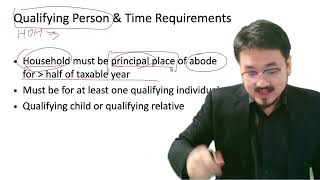
4:28Head of Household: Qualifying Person Time Requirements Explained
 4:22
4:22