Entity Classification Deemed Transactions Guide for LLC Elections (2025-2026)

Entity classification election (Form 8832)
How an eligible entity chooses how it is taxed.
Check the default
Single-member = disregarded; multi-member = partnership.
Decide the target
Corporation, partnership, or disregarded entity.
File Form 8832
Elect the new classification with an effective date.
File the matching return
The election determines which return you file.
Key Takeaways
- Changing classification can trigger deemed federal tax transactions.
- A filing election can have asset-transfer consequences even without a cash event.
- Default changes and elective changes need separate analysis.
- Classification work should be modeled, not improvised.
An election can create tax consequences even when no cash changed hands
Publication 3402 warns that classification changes can trigger deemed transactions. For example, when a partnership elects to become a corporation, the IRS treats the partnership as contributing all assets and liabilities to a corporation in exchange for stock, followed by a liquidation of the partnership into the hands of the partners. The founders may experience this as a form filing. The tax law experiences it as a deemed series of asset and ownership transactions.
That is why entity changes should be modeled before the form is mailed
Founders who switch classifications to solve one filing problem can accidentally create basis, distribution, earnings-and-profits, or transfer questions they never priced into the decision. The election might still be correct, but it should be made with a transaction memo, not a shrug.
Default changes and elective changes are not the same thing
Publication 3402 separates membership-driven default conversions from elective changes under Form 8832. That distinction matters because the deemed transactions and the implementation steps can differ. The IRS is not just asking what box you checked. It is asking how the legal and economic story changed.
Frequently Asked Questions
Why does a classification election matter if ownership did not change?
Because the IRS may treat the election as a deemed contribution, liquidation, or other transaction for federal tax purposes.
Where does the IRS explain these deemed transactions?
Publication 3402 discusses the deemed transaction consequences of elective classification changes for LLCs.
Is every classification change tax-neutral?
No. Some changes may be manageable, but they should be analyzed before filing because the consequences can be significant.
IRS Form 8832 Instructions
Official IRS source on irs.gov
Listen on Spotify
Money & Tax Talk with Rippa — 5/5 rating
Need Help Filing?
Contact us with your situation and we'll point you to the right path
Never miss an IRS deadline
Get free email reminders for Form 5472, state annual reports, quarterly estimated tax, and OBBBA rule changes — built for foreign-owned LLC owners. No spam. Unsubscribe anytime.
We respect your privacy. No spam, ever.
Need to file your foreign-owned LLC return?
Skip the CPA bill. Our guided wizard builds your IRS-ready filing package, step by step.
Includes its walkthrough video pack
Start filing →
Ask the AI tools, free
Tax Return Drafter, Catch-Up Planner, Form Reviewer, IRS Notice Decoder — purpose-built AI tools, no signup needed.
Free tier · BYOK Anthropic/OpenAI for power use
Browse tools →
Starting your foreign-owned LLC?
Vetted partners we use ourselves: doola & Firstbase for formation, Mercury for banking, Alohi for IRS faxing.
No-fluff recommendations, no Northwest
See partners →
More on Form 8832 Entity Classification
Form 8832 Effective Date Window Guide
Form 8832 Effective Date Window Guide for Foreign-Owned LLCs (2025-2026)
Late Form 8832 Relief Guide
Late Form 8832 Relief Guide for Foreign-Owned LLCs (2025-2026)
Form 8832 60-Month Rule Guide
Form 8832 60-Month Rule Guide for LLC Classification Changes (2025-2026)
Form 8832 Entity Classification Guide
Form 8832 Entity Classification Guide for Foreign-Owned LLCs
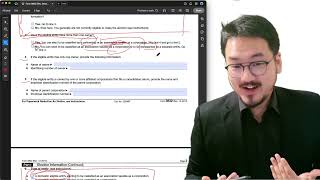 5:23
5:23Form 8832 Entity Classification Election: Key Rules You Must Know (Part 3)
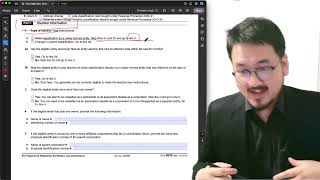 3:56
3:56