Late Form 8832 Relief Guide for Foreign-Owned LLCs (2025-2026)

Entity classification election (Form 8832)
How an eligible entity chooses how it is taxed.
Check the default
Single-member = disregarded; multi-member = partnership.
Decide the target
Corporation, partnership, or disregarded entity.
File Form 8832
Elect the new classification with an effective date.
File the matching return
The election determines which return you file.
Key Takeaways
- Late Form 8832 relief can exist, but it depends on meeting specific IRS conditions.
- Consistency across the entity and owners is one of the most important facts in the relief file.
- Reasonable cause still matters.
- If the automatic route is missed, the case may move into private-letter-ruling territory.
Late relief exists, but it is not a magic reset button
Founders often discover a missing Form 8832 only after a return is drafted under the classification they intended to elect months earlier. The good news is that the IRS still provides a late-election relief path in some cases. The older Form 8832 instructions point to Revenue Procedure 2009-41 for late classification relief, and the IRS late-election relief page explains when late corporate-classification relief may be paired with a late S election under Revenue Procedure 2013-30.
The important part is that relief is procedural and conditional. It does not erase the need to prove what the entity intended and how everyone reported.
The case usually turns on consistency and cause
The relief materials focus on whether the entity failed solely because the election was not filed on time, whether the entity has reasonable cause, and whether the returns were filed consistently with the intended classification. That means the relief package is stronger when the bookkeeping, owner returns, and filing history all point in one direction. If the records show mixed treatment, the file becomes much harder to defend.
Beyond the automatic lane, the file becomes a ruling case
Revenue Procedure 2009-41 gives a defined route only within its eligibility limits. When those limits are missed, the taxpayer may need to request a private letter ruling instead. That changes the cost, the timeline, and the expected level of legal support. A good adviser should tell the founder which lane the case is actually in before everyone assumes late relief is routine.
Frequently Asked Questions
What is the main IRS procedure for late entity classification relief?
The Form 8832 instructions point to Rev. Proc. 2009-41 for late classification-election relief, subject to its conditions.
What makes a late-election file stronger?
A consistent return history, a clear intended effective date, and a credible reasonable-cause explanation all help materially.
What if the case does not fit the IRS relief procedure?
The entity may need a private letter ruling instead of automatic or streamlined relief.
IRS Form 8832 Instructions
Official IRS source on irs.gov
Listen on Spotify
Money & Tax Talk with Rippa — 5/5 rating
Need Help Filing?
Contact us with your situation and we'll point you to the right path
Never miss an IRS deadline
Get free email reminders for Form 5472, state annual reports, quarterly estimated tax, and OBBBA rule changes — built for foreign-owned LLC owners. No spam. Unsubscribe anytime.
We respect your privacy. No spam, ever.
Need to file your foreign-owned LLC return?
Skip the CPA bill. Our guided wizard builds your IRS-ready filing package, step by step.
Includes its walkthrough video pack
Start filing →
Ask the AI tools, free
Tax Return Drafter, Catch-Up Planner, Form Reviewer, IRS Notice Decoder — purpose-built AI tools, no signup needed.
Free tier · BYOK Anthropic/OpenAI for power use
Browse tools →
Starting your foreign-owned LLC?
Vetted partners we use ourselves: doola & Firstbase for formation, Mercury for banking, Alohi for IRS faxing.
No-fluff recommendations, no Northwest
See partners →
More on Form 8832 Entity Classification
Form 8832 Effective Date Window Guide
Form 8832 Effective Date Window Guide for Foreign-Owned LLCs (2025-2026)
Form 8832 60-Month Rule Guide
Form 8832 60-Month Rule Guide for LLC Classification Changes (2025-2026)
Entity Classification Deemed Transactions Guide
Entity Classification Deemed Transactions Guide for LLC Elections (2025-2026)
Form 8832 Entity Classification Guide
Form 8832 Entity Classification Guide for Foreign-Owned LLCs
 5:23
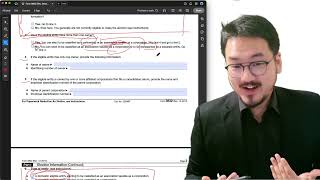
5:23Form 8832 Entity Classification Election: Key Rules You Must Know (Part 3)
 3:56
3:56