Form 1116 Carryover and Redetermination Guide (2025-2026)

Credit documentation path
How research and business-credit claims are supported before they affect a return.
Identify eligible activity
Separate qualified research or credit activity from ordinary business costs.
Collect project records
Keep time, payroll, contractor, supply, and project documentation.
Compute on worksheets
Credits usually require calculations before they reach the return.
Attach to the return path
Use Form 3800 or product-specific review where applicable.
Key Takeaways
- Unused foreign taxes generally carry back 1 year and forward 10 years under the Form 1116 rules.
- Schedule B tracks carryovers, and Schedule C can become relevant for redeterminations.
- Foreign tax changes after the original return may require Form 1040-X and revised Form 1116 work.
- Records, translations, and exchange-rate support should be preserved across the life of the carryover.
Unused foreign taxes do not disappear at year-end
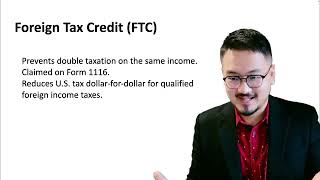
The 2025 Instructions for Form 1116 state that unused foreign taxes generally can be carried back 1 year and then forward 10 years, subject to the separate-category rules. The same instructions say Schedule B (Form 1116) should be attached when a taxpayer carries forward prior-year foreign taxes or generates a carryover in the current year.
That makes Form 1116 a multi-year tracking system, not just a single-year worksheet. A founder with inconsistent income or changing residence may have a valuable credit history that only shows up if the carryover file is maintained correctly.
Foreign tax redeterminations can trigger amended-return work long after the original filing
Publication 514 explains that a foreign tax redetermination often requires the taxpayer to notify the IRS, usually by filing Form 1040-X with a revised Form 1116 and a statement containing detailed facts about the changed foreign tax. The publication also describes situations where Schedule C (Form 1116) on a current-year return may be enough if the redetermination does not change U.S. tax because carryovers already absorb the difference.
This is one of the least intuitive parts of the credit system. A foreign refund, audit change, or late assessment can force U.S. adjustments years later.
The evidence file matters as much as the arithmetic
Publication 514 lists records taxpayers should keep, including receipts for foreign tax payments, foreign tax returns, payee statements, translations where necessary, and the exchange-rate facts used in the computation. Once foreign taxes are carried across years, those records become the support for every later use of the carryover.
In practice, a weak Form 1116 file usually fails in two places: nobody can explain where the carryover came from, and nobody can explain whether later foreign tax changes were reported back to the IRS.
Frequently Asked Questions
How long can a foreign tax credit carryforward last?
The 2025 Instructions for Form 1116 say unused foreign taxes generally carry forward for 10 years after a 1-year carryback step.
Do foreign tax refunds always require an amended U.S. return?
Often they do, but Publication 514 explains that in some cases a current-year Schedule C filing can be enough if the redetermination does not change the U.S. tax due.
Why is Schedule B important on Form 1116?
Because it reconciles prior-year and current-year foreign tax carryovers and keeps the credit history visible.
Listen on Spotify
Money & Tax Talk with Rippa — 5/5 rating
Need Help Filing?
Contact us with your situation and we'll point you to the right path
Never miss an IRS deadline
Get free email reminders for Form 5472, state annual reports, quarterly estimated tax, and OBBBA rule changes — built for foreign-owned LLC owners. No spam. Unsubscribe anytime.
We respect your privacy. No spam, ever.
Need to file your foreign-owned LLC return?
Skip the CPA bill. Our guided wizard builds your IRS-ready filing package, step by step.
Includes its walkthrough video pack
Start filing →
Ask the AI tools, free
Tax Return Drafter, Catch-Up Planner, Form Reviewer, IRS Notice Decoder — purpose-built AI tools, no signup needed.
Free tier · BYOK Anthropic/OpenAI for power use
Browse tools →
Starting your foreign-owned LLC?
Vetted partners we use ourselves: doola & Firstbase for formation, Mercury for banking, Alohi for IRS faxing.
No-fluff recommendations, no Northwest
See partners →
More on Tax Credits (FTC, GBC)
Form 1116 Schedule B Carryover Guide
Form 1116 Schedule B Carryover Guide (2025-2026)
Form 1116 Schedule C Redetermination Guide
Form 1116 Schedule C Foreign Tax Redetermination Guide (2025-2026)
Form 1116 Paid vs Accrued Election Guide
Form 1116 Paid vs Accrued Election Guide for Foreign Tax Credit Filers (2025-2026)
Form 1116 Separate Category Guide
Form 1116 Separate Category Guide for Foreign Tax Credit Filers (2025-2026)
R&D Credits for Foreign-Owned Software Companies
R&D Credits for Foreign-Owned Software Companies Using U.S. LLCs (2025-2026)
 3:42
3:42