Form 1116 Separate Category Guide for Foreign Tax Credit Filers (2025-2026)

Credit documentation path
How research and business-credit claims are supported before they affect a return.
Identify eligible activity
Separate qualified research or credit activity from ordinary business costs.
Collect project records
Keep time, payroll, contractor, supply, and project documentation.
Compute on worksheets
Credits usually require calculations before they reach the return.
Attach to the return path
Use Form 3800 or product-specific review where applicable.
Key Takeaways
- The foreign tax credit limitation is computed separately by income category.
- A taxpayer often needs more than one Form 1116 in the same year.
- Schedule K-3 data still has to be slotted into the correct category-specific Form 1116.
- Wrong category selection can distort carryovers and later redeterminations.
Form 1116 is a multiple-form regime, not a single universal worksheet
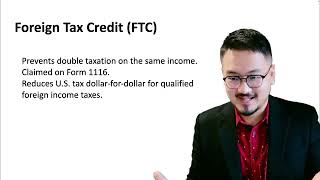
Topic no. 856 says the foreign tax credit limitation is computed separately for passive income, treaty re-sourced income, section 901(j) income, section 951A category income, foreign branch income, and general category income. The 2025 Instructions for Form 1116 reinforce that point by repeatedly directing the taxpayer to use a separate Form 1116 for each applicable category of income.
That means the first FTC error often happens before any arithmetic. It happens when unlike income categories are blended into one form because the taxpayer wants a simpler package.
Pass-through reporting does not remove the separate-category job
The Form 1116 instructions say amounts from Schedule K-3 are included using a separate Form 1116 for each category of income received. The sourcing may already be provided by the partnership or S corporation, but the category-by-category credit computation still belongs to the taxpayer. The pass-through form is an input, not a substitute for the FTC structure.
This matters for founders with both direct foreign taxes and pass-through foreign taxes. The categories have to be reconciled together, not prepared in parallel without cross-checking.
The category decision drives carryovers, losses, and later redeterminations too
Once the wrong category is used, the mistake spreads into carryover tracking, line-18 adjustments, and Schedule C redetermination reporting. That is why the category memo should be built before the form is populated. For some taxpayers, the highest-risk line on Form 1116 is not the limitation fraction. It is the category box at the top.
A short written memo explaining why each foreign income stream fits a given category is often the simplest way to prevent years of downstream confusion.
Frequently Asked Questions
Can I put passive and general category foreign income on one Form 1116?
No. The 2025 Instructions for Form 1116 require a separate Form 1116 for each applicable category of income.
Does Schedule K-3 solve the category issue for me completely?
Not completely. The schedule helps source and classify items, but the taxpayer still has to prepare the correct category-specific Form 1116 set.
Why is the category choice so important?
Because it drives the limitation calculation, carryovers, and the structure of any later redetermination reporting.
Listen on Spotify
Money & Tax Talk with Rippa — 5/5 rating
Need Help Filing?
Contact us with your situation and we'll point you to the right path
Never miss an IRS deadline
Get free email reminders for Form 5472, state annual reports, quarterly estimated tax, and OBBBA rule changes — built for foreign-owned LLC owners. No spam. Unsubscribe anytime.
We respect your privacy. No spam, ever.
Need to file your foreign-owned LLC return?
Skip the CPA bill. Our guided wizard builds your IRS-ready filing package, step by step.
Includes its walkthrough video pack
Start filing →
Ask the AI tools, free
Tax Return Drafter, Catch-Up Planner, Form Reviewer, IRS Notice Decoder — purpose-built AI tools, no signup needed.
Free tier · BYOK Anthropic/OpenAI for power use
Browse tools →
Starting your foreign-owned LLC?
Vetted partners we use ourselves: doola & Firstbase for formation, Mercury for banking, Alohi for IRS faxing.
No-fluff recommendations, no Northwest
See partners →
More on Tax Credits (FTC, GBC)
Form 1116 Paid vs Accrued Election Guide
Form 1116 Paid vs Accrued Election Guide for Foreign Tax Credit Filers (2025-2026)
Form 1116 Carryover and Redetermination Guide
Form 1116 Carryover and Redetermination Guide (2025-2026)
Form 1116 Schedule B Carryover Guide
Form 1116 Schedule B Carryover Guide (2025-2026)
Form 1116 Schedule C Redetermination Guide
Form 1116 Schedule C Foreign Tax Redetermination Guide (2025-2026)
R&D Credits for Foreign-Owned Software Companies
R&D Credits for Foreign-Owned Software Companies Using U.S. LLCs (2025-2026)
 3:42
3:42