Form W-8BEN for YouTube and AdSense: Why Google Asks for Tax Information

Key Takeaways
- Google is a U.S. company, so the IRS treats your YouTube/AdSense revenue as U.S.-source income to a foreign person
- U.S. payers are required by Chapter 3 of the IRC to collect a W-8BEN from every foreign payee
- The W-8BEN both certifies non-U.S. status and claims tax treaty benefits that can reduce withholding below 30%
- Forms expire every three years OR when your information changes — both triggers require a fresh submission
- Default withholding (24%+) applies the moment the form expires, and recovering it requires filing a U.S. non-resident tax return
Why YouTube and AdSense Suddenly Ask for Tax Information
If you're a creator outside the United States, sooner or later you'll see a message in your YouTube or AdSense dashboard: "Your tax form has expired," "You must submit tax information," or worse — "Google will begin withholding tax from your payout." This isn't a bug or a glitch. It's a legal obligation Google is fulfilling on behalf of the U.S. tax authorities, and ignoring it means your payouts will be reduced by default withholding.
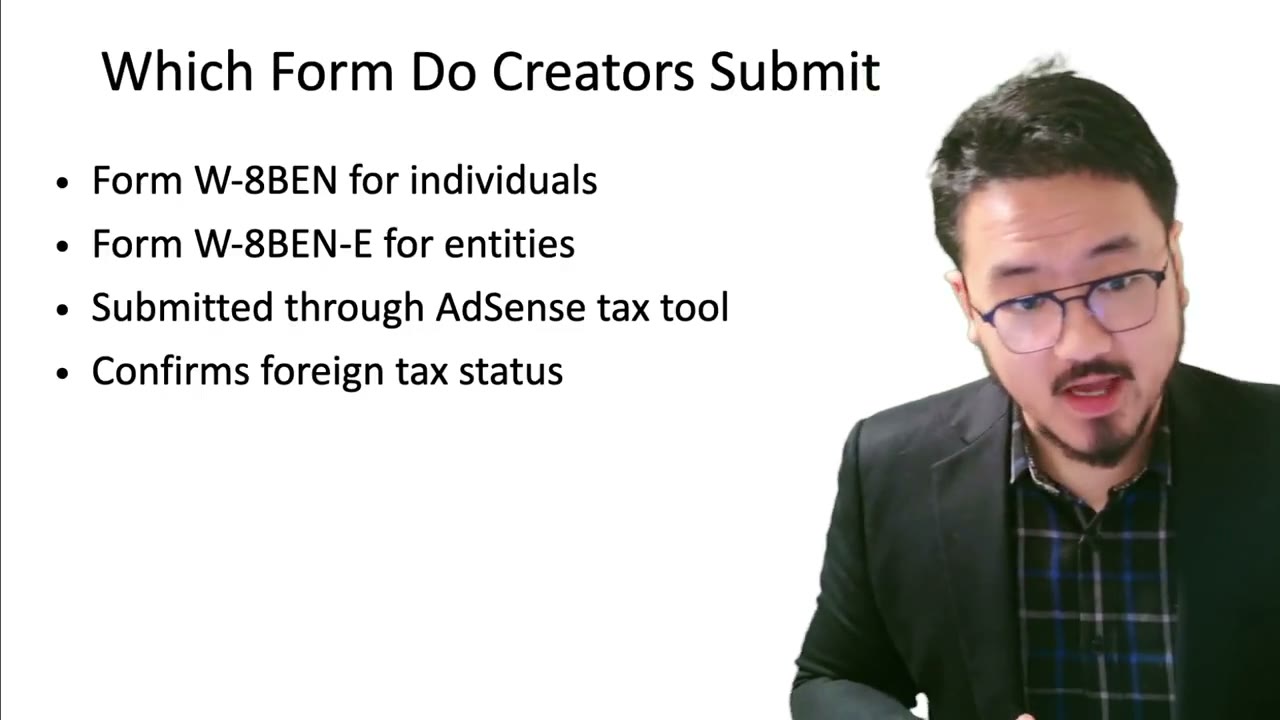
The specific form Google is asking for is usually Form W-8BEN (for individuals) or Form W-8BEN-E (for entities). It tells Google two things: (1) that you are not a U.S. person for tax purposes, and (2) whether you qualify for a reduced withholding rate under a tax treaty between your country and the United States.
Google Is a U.S. Company — That's What Triggers This
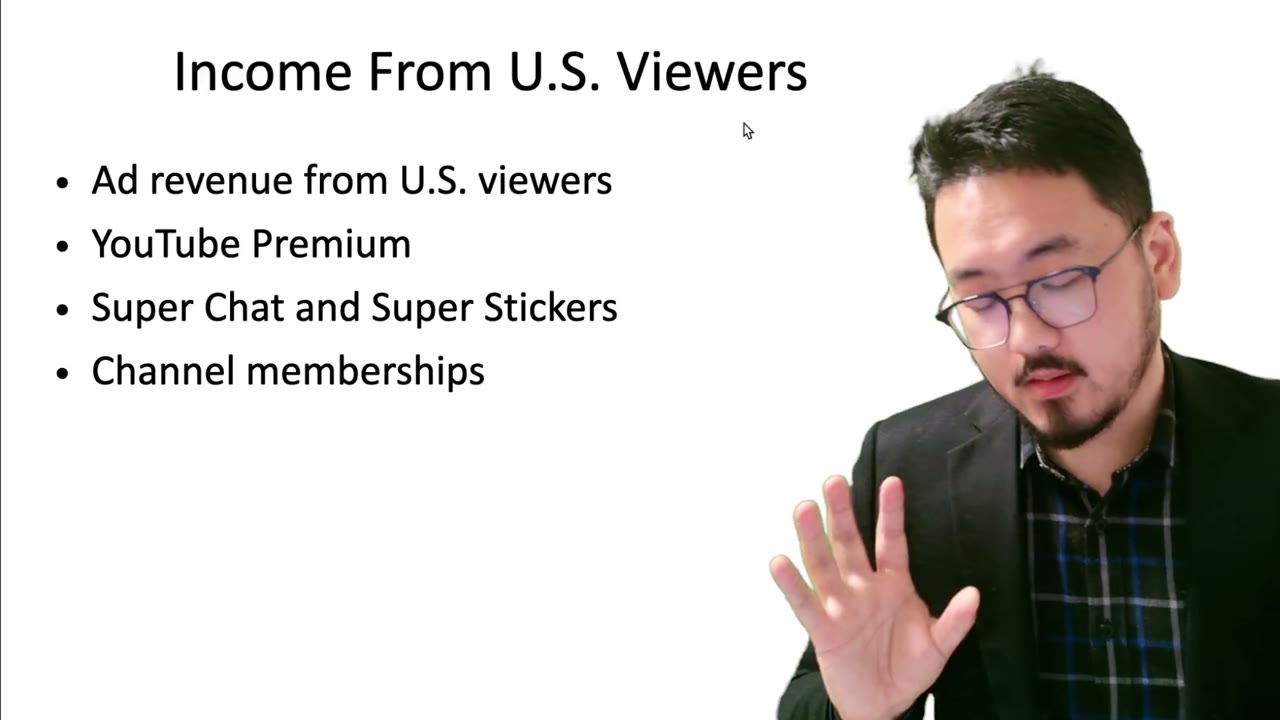
Google has subsidiaries, data centers, and offices around the world. From a business perspective it looks like a global company. But from the IRS's perspective, the entity actually paying you for YouTube ads, AdSense impressions, or AdMob revenue is a U.S. company. That single fact triggers the entire U.S. withholding tax regime.
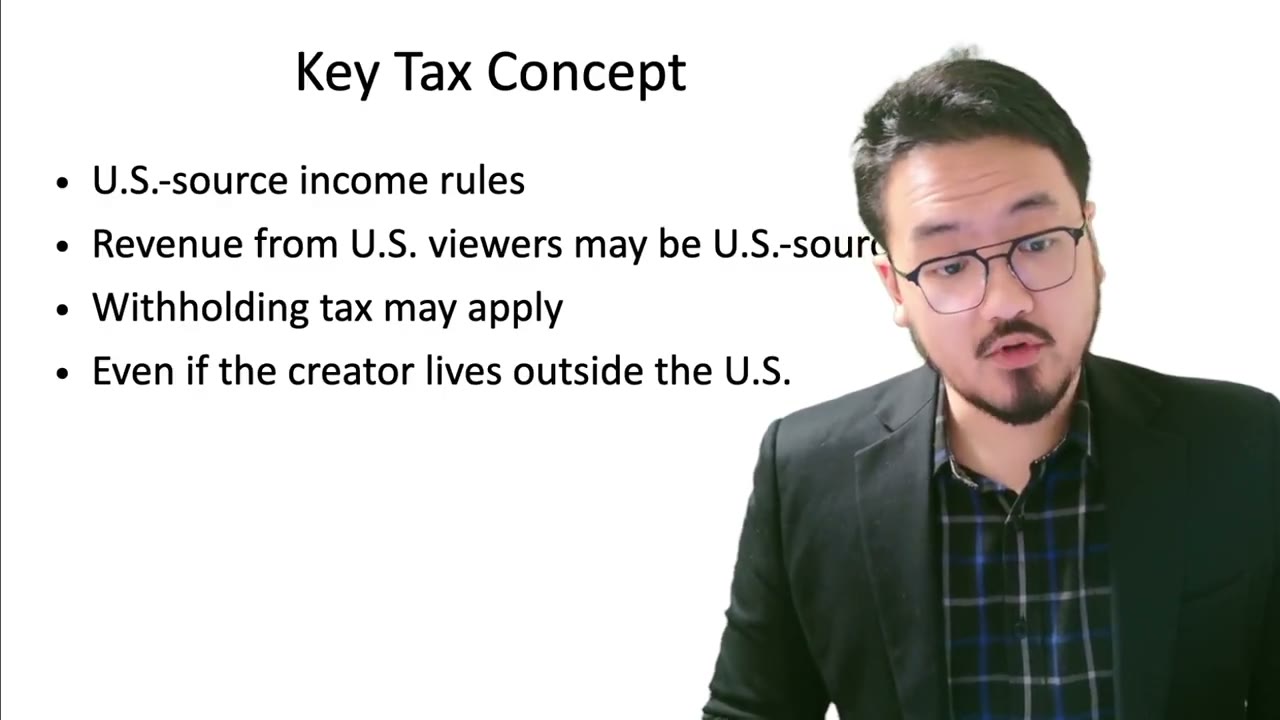
Under Chapter 3 of the U.S. Internal Revenue Code, any U.S. payer that pays U.S.-source income to a foreign person is required to determine the recipient's tax status and withhold appropriately. The withholding obligation falls on the payer (Google), not on you — but the cost ultimately comes out of your payment. Collecting the W-8BEN is how Google documents that it has performed its due diligence.
The Two Things the W-8BEN Establishes
First, the W-8BEN certifies that you are a non-U.S. person. You confirm you are not a U.S. citizen, not a green card holder, and not a U.S. resident under the substantial presence test. This is what determines whether you're subject to the foreign-person withholding regime at all.
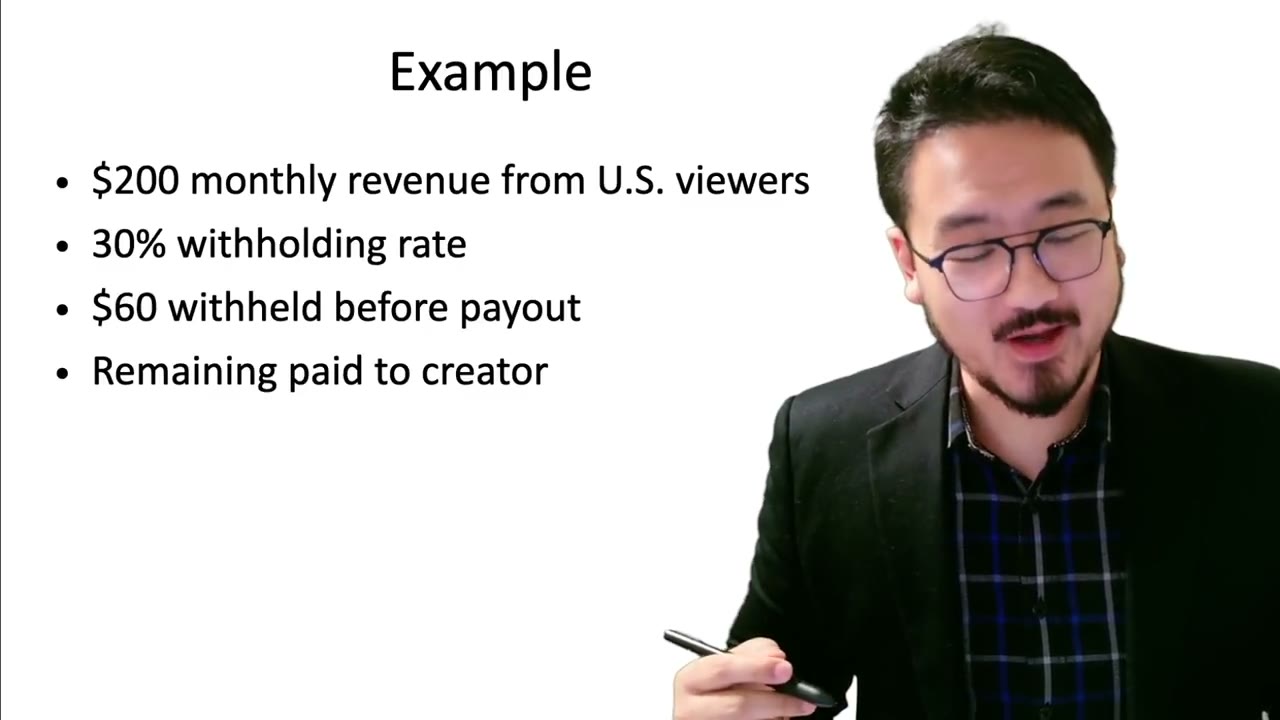
Second, the W-8BEN claims any tax treaty benefits you're entitled to. The United States has bilateral tax treaties with dozens of countries — each treaty specifies whether the withholding rate on royalties, dividends, or other passive income can be reduced below the statutory 30%. If your country has a favorable treaty and you correctly cite the treaty article on the W-8BEN, Google will apply the reduced rate. Without a properly filed W-8BEN, the default 30% kicks in.
Why the Form Expires
The W-8BEN is not a one-time submission. The IRS treats the certification as valid for three calendar years following the year in which it was signed — for example, a form signed in March 2024 remains valid through December 31, 2027. After that, Google must obtain a fresh form, and if you don't provide one, default withholding restarts.
It also expires earlier if any of the information on the form changes — your name, address, country of residence, or tax treaty status. Many creators receive an "expired" notice not because three years passed but because they moved abroad, changed their entity structure, or never re-verified after a small profile edit. The expiration is automatic and Google has no discretion to keep the old form active.
What Happens If You Ignore the Request
If you don't submit (or update) the W-8BEN by the deadline Google specifies, the default withholding rate is applied to all subsequent payments. For most YouTube and AdSense revenue from U.S.-based viewers or advertisers, that rate is 24% as backup withholding — but it can climb higher depending on the income classification. Even if your country has a tax treaty that would have reduced the rate to 0% on royalties, you don't get the benefit retroactively. The withholding is applied and remitted to the IRS, and recovering it requires filing a U.S. tax return as a non-resident — far more work than just submitting the W-8BEN.
The practical advice: when you see the request in your YouTube Studio or AdSense dashboard, complete it the same day. The form takes about five minutes to fill in correctly, and the difference in withholding can be the difference between keeping 70% and 100% of treaty-eligible income.
Frequently Asked Questions
I'm not a U.S. person — why is Google asking me for U.S. tax information?
Because Google itself is a U.S. company. Under U.S. tax law, any U.S. company that pays a foreign person is required to document who they're paying and withhold the appropriate tax. The W-8BEN is how you tell Google you're foreign and (optionally) claim a treaty rate. It's Google's compliance obligation, not yours — but you bear the cost if you don't provide the form.
How often do I have to re-submit Form W-8BEN?
Every three calendar years following the year you signed it. A form signed in 2024 stays valid through December 31, 2027. It also expires earlier if your name, address, country of residence, or treaty status changes.
What happens if I miss the deadline Google gives me?
Default withholding (typically 24% backup withholding, sometimes 30%) starts on your next payout. You can recover the withheld amount, but only by filing a U.S. non-resident return (Form 1040-NR). It's much easier to file the W-8BEN before the deadline.
Never miss an IRS deadline
Get free email reminders for Form 5472, state annual reports, quarterly estimated tax, and OBBBA rule changes — built for foreign-owned LLC owners. No spam. Unsubscribe anytime.
We respect your privacy. No spam, ever.
Need to file your foreign-owned LLC return?
Skip the CPA bill. Our guided wizard builds your IRS-ready filing package, step by step.
Includes its walkthrough video pack
Start filing →
Ask the AI tools, free
Tax Return Drafter, Catch-Up Planner, Form Reviewer, IRS Notice Decoder — purpose-built AI tools, no signup needed.
Free tier · BYOK Anthropic/OpenAI for power use
Browse tools →
Starting your foreign-owned LLC?
Vetted partners we use ourselves: doola & Firstbase for formation, Mercury for banking, Alohi for IRS faxing.
No-fluff recommendations, no Northwest
See partners →
More on Foreign Income Reporting
 1:42
1:42Form W-8BEN: What Counts as US-Source Income for YouTube and AdSense Creators
 1:55
1:55Form W-8BEN Treaty Rates: 0% to 30% Withholding by Country
 3:35
3:35Form W-8BEN: Why Skipping It Triggers 24% Withholding on Your GLOBAL Revenue
 4:20
4:20W-8BEN vs W-8BEN-E for Google: The Disregarded-LLC Rule
Excess Withholding Refund Workflow Guide
Excess Withholding Refund Workflow Guide for Foreign Founders (2025-2026)
 5:18
5:18