USPS Certified Mail vs Registered Mail for IRS Filings — Which to Use

Key Takeaways
- §7502 'timely mailing is timely filing' protects you if the IRS receives your filing after the due date — but only with proof
- USPS Certified Mail ($4.85): postmarked receipt is proof of mailing date — most common choice for IRS filings
- USPS Registered Mail ($19.95): every USPS facility logs the handoff — strongest audit defense, more expensive
- Both satisfy §7502 timely-mailing protection under Treas. Reg. §301.7502-1
- Always bring to a Post Office counter — do NOT drop in a blue box if you need a postmarked receipt
Why USPS Proof Matters: The §7502 Timely-Mailing Rule
If you're mailing your Form 5472 + pro forma 1120 from inside the United States, the IRS-endorsed mail method is USPS. Specifically, the IRS recognizes two USPS service tiers for IRS filings under §7502 of the Internal Revenue Code: Certified Mail and Registered Mail.
§7502 is known as the 'timely mailing is timely filing' rule. It says that if you mail your tax return on or before the due date, the IRS treats it as filed on the mailing date — even if it physically arrives at the IRS office days later. Without §7502 protection, a return that's stuck in transit on the due date would be late, with all the §6038A penalties that implies.
To claim §7502 protection, you need proof of the mailing date. That's exactly what Certified Mail and Registered Mail provide.
USPS Registered Mail: Date of Registration = Postmark
Registered Mail is USPS's highest-security service. When you register a piece of mail:
- USPS records the date of registration in their internal system. - The package is hand-tracked from origin to destination — every USPS facility that handles it logs the handoff. - The recipient (the IRS Ogden PIN Unit) must sign a delivery acknowledgment. - Under Treas. Reg. §301.7502-1, the date of registration is treated as the postmark date for §7502 timely-mailing purposes.
Cost: $19.95 + postage as of 2026 (verify at usps.com — prices change annually). Speed: similar to First-Class Mail, typically 3-7 business days domestically.
The defining feature: every handoff is logged. If the package goes missing, USPS can tell you which facility had it last. This is the strongest possible audit defense for a mailed IRS filing.
USPS Certified Mail: Receipt Date = Postmark
Certified Mail is USPS's most popular tracked service for tax filings:
- You hand the envelope to a USPS employee at a Post Office counter. - They postmark a green-and-white receipt (PS Form 3800) with the date. - The postmarked receipt is treated as the postmark date for §7502 timely-mailing purposes under Treas. Reg. §301.7502-1. - You retain the receipt. USPS does not hand-track each facility — they only record the final delivery.
Cost: $4.85 + postage as of 2026. Optional add-ons: Return Receipt (the IRS signs and mails back a green card) for $4.10 extra, or Return Receipt Electronic for $2.32.
The defining feature: the postmarked receipt in your hand is the proof. You don't need USPS to retrieve any records — you have everything in physical form.
Side-by-Side: Cost, Speed, and Proof Strength
Quick comparison:
| Feature | Certified Mail | Registered Mail | | --- | --- | --- | | Cost (2026) | $4.85 + postage | $19.95 + postage | | Speed | 3-7 days | 3-7 days | | Proof of mailing date | Postmarked receipt | Date of registration | | Tracking | Final delivery only | Every facility handoff | | Required signature | No (Return Receipt is add-on) | Yes (built-in) | | §7502 timely-mailing | Yes | Yes | | §7502(f) PDS equivalent | Not needed (inside U.S.) | Not needed (inside U.S.) |
For most foreign-owned LLC owners filing from inside the U.S., Certified Mail with Return Receipt is the sweet spot. It costs around $9 total (vs ~$20 for Registered Mail), gives you a postmarked receipt for §7502 protection, and the Return Receipt confirms the IRS received the package.
Registered Mail is the right choice if the package contents are valuable (sensitive originals, supporting documents you can't easily reproduce) or if you anticipate any chance of dispute. The per-facility tracking is hard to beat.
How to Send and What to Keep Afterward
Step-by-step:
1. Bring the sealed envelope to a USPS Post Office during business hours. Do not drop it in a blue collection box — you need a clerk to postmark the receipt.
2. Tell the clerk you want either Certified Mail or Registered Mail. For Certified, also request Return Receipt (the green card or electronic version) for an extra ~$4.
3. The clerk will affix a barcode label to the envelope and postmark a receipt for you. Verify the postmark date matches the day you're mailing (occasionally clerks pre-postmark, which can backfire if you have any dispute).
4. Take the receipt home and scan it. Store the scan with your tax records and the photocopy of the signed forms.
5. Track the package online at usps.com using the receipt number. Save a PDF of the delivery confirmation page once the IRS signs for it.
6. Retain all proof for at least 6 years (longer of §6501 examination period or §6501(e) substantial-omission period). If you ever face an audit or notice, this paper trail is your defense.
Frequently Asked Questions
Which should I choose: Certified or Registered Mail?
Certified Mail with Return Receipt for most filings. It's about $9 total and gives you both proof of mailing and proof of delivery. Use Registered Mail if you're sending originals you can't replace or if you want per-facility tracking.
Does the Return Receipt actually matter?
Yes, for two reasons. First, it confirms the IRS received the package — without it, you only have proof of mailing, not proof of receipt. Second, the signed Return Receipt is dated, which can be useful evidence if the IRS later claims they never got it.
Can I use USPS Priority Mail or Express instead?
Priority Mail Express is on the §7502(f) Private Delivery Services list and provides §7502 protection. Regular Priority Mail (without Certified or Registered) does NOT provide §7502 protection — only the date of receipt counts, not the date of mailing.
What if my Return Receipt never comes back?
USPS allows 30 days for Return Receipt to be returned. If 30+ days pass, you can file PS Form 3811-A (substitute Return Receipt request). You can also pull the delivery scan from usps.com tracking — that's accepted by the IRS as alternative proof of delivery.
IRS Form 5472 Instructions
Official IRS source on irs.gov
Listen on Spotify
Money & Tax Talk with Rippa — 5/5 rating
Never miss an IRS deadline
Get free email reminders for Form 5472, state annual reports, quarterly estimated tax, and OBBBA rule changes — built for foreign-owned LLC owners. No spam. Unsubscribe anytime.
We respect your privacy. No spam, ever.
Need to file your foreign-owned LLC return?
Skip the CPA bill. Our guided wizard builds your IRS-ready filing package, step by step.
Includes its walkthrough video pack
Start filing →
Ask the AI tools, free
Tax Return Drafter, Catch-Up Planner, Form Reviewer, IRS Notice Decoder — purpose-built AI tools, no signup needed.
Free tier · BYOK Anthropic/OpenAI for power use
Browse tools →
Starting your foreign-owned LLC?
Vetted partners we use ourselves: doola & Firstbase for formation, Mercury for banking, Alohi for IRS faxing.
No-fluff recommendations, no Northwest
See partners →
More on Form 5472 & Foreign-Owned LLCs
 1:30
1:30Can You Use USPS From Outside the U.S. for IRS Filings? Real Options
Foreign-Owned LLC IRS Mail Submission — 5-Point Pre-Mail Checklist
Foreign-Owned LLC IRS Mail Checklist: 5 Steps Before You Send Form 5472
 1:30
1:30Why Foreign-Owned LLCs Ignore the Standard Form 1120 Mailing Address
 1:45
1:45Why Register Your Own DHL Express Account for IRS Filings
 2:30
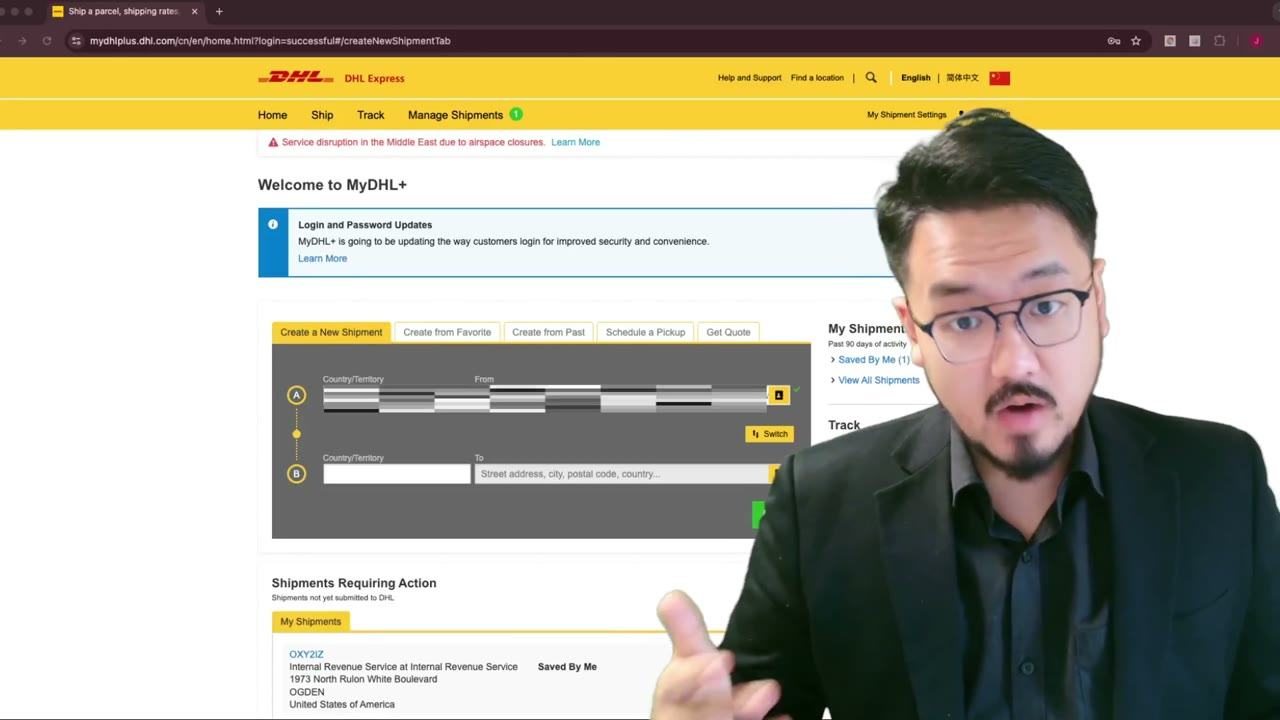
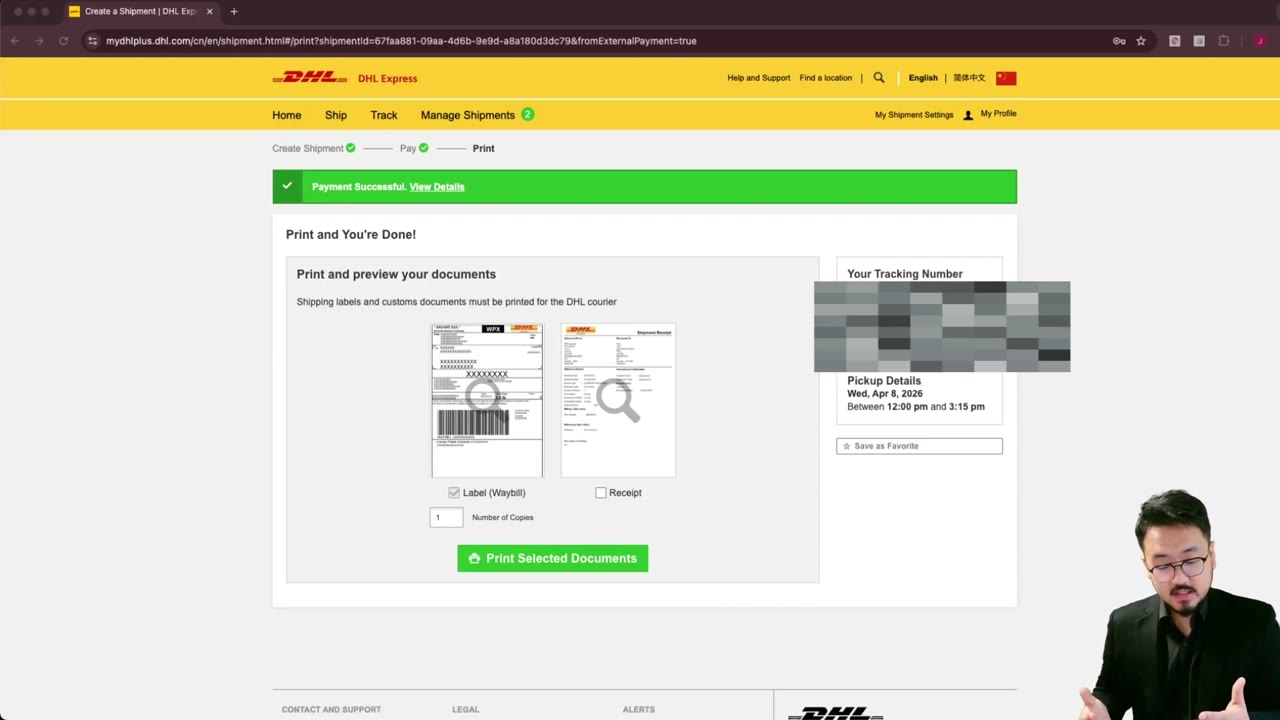
2:30DHL Express to IRS: How to Fill Receiver Info (Step-by-Step)
 2:30
2:30