Does a Dormant Foreign-Owned LLC File Form 5472? The Parts IV/V/VI Test

Form 5472 reporting flow
How a foreign-owned single-member LLC reports its reportable transactions to the IRS.
Identify reportable transactions
Money in/out between the LLC and its foreign owner or related parties.
Prepare pro forma 1120 + 5472
Form 5472 attaches to a pro forma Form 1120 cover page.
File by the deadline
Mail or fax the package by the corporate return due date.
Keep records
Retain transaction records supporting every reported amount.
Key Takeaways
- Review Form 5472 every year; the filing turns on transactions reportable in Parts IV, V, or VI, not mere existence
- Most "sleepy LLCs" have hidden activity: formation fees, franchise tax, registered agent fees, all paid by the owner
- A true no-reportable-transaction year can fall within the current instructions' filing exception
- The initial penalty is $25,000 per required form, with continuation penalties possible after an IRS notice and cure period
- Zero income is not the test; owner-paid costs, contributions, loans, distributions, formation, and dissolution can be reportable
The Sleepy LLC Trap
A common foreign owner pattern is to form an LLC, never open a bank account, and never use it for operations. Calling the entity "dormant" does not answer the Form 5472 question. The current instructions provide an exception when there are no transactions reportable in Parts IV, V, or VI, but many apparently dormant LLCs still have owner-paid state fees, registered-agent costs, formation transactions, loans, contributions, distributions, or dissolution activity.
The safe process is an annual transaction reconciliation supported by records. Do not infer a filing from the entity's mere existence, and do not infer an exception from zero revenue or an empty business bank account.
Why "No Activity" Almost Always Has Hidden Activity
Even an LLC that never opened a bank account usually has activity the owner forgot about:
- Formation fees paid by the owner (Atlas, doola, Firstbase, attorney) → capital contribution - Delaware annual tax ($400/year beginning with 2026) paid by the owner → capital contribution or reimbursable - Registered agent service fees ($100–$200/year) paid by the owner → capital contribution - Any incidental payment made on the LLC's behalf using personal funds
The owner thinks of these as just "keeping the LLC alive" administrative costs. To the IRS, they're capital contributions from a foreign related party — exactly the kind of transaction Form 5472 is meant to capture.
The No-Reportable-Transaction Exception
If the reconciliation truly shows no transactions reportable in Parts IV, V, or VI, the current Form 5472 instructions say the filing requirement does not apply for that year. This is narrower than "no revenue": owner-paid expenses, contributions, reimbursements, loans, distributions, formation, acquisition, disposition, and dissolution can be reportable.
Keep the workpaper that supports the exception. Do not create an all-zero Form 5472 merely because the entity existed, and do not leave a required form blank when reportable transactions did occur.
The $25,000 Minimum Penalty
Failure to file a required Form 5472 — or filing it substantially incomplete — can trigger a $25,000 penalty per required form. This is not a percentage of unpaid tax. It can apply even when the pro forma wrapper calculates no tax.
Before calculating exposure for a missed year, determine whether the entity actually had a filing obligation and identify each related party and reportable transaction. Do not multiply penalties for a year that falls within the instructions' no-reportable-transaction exception.
Why the Penalty Is So Severe
The penalty structure supports cross-border information reporting and record access even when the underlying transaction produces no corporate income tax. That makes classification and recordkeeping as important as payment calculations.
The amount is large enough that foreign owners should review Form 5472 at formation and each year-end. The correct message is not that every LLC files; it is that every foreign-owned disregarded LLC should document the transaction test and timely file whenever that test is met.
The Penalty Adds Up If You Keep Ignoring It
If you receive an initial notice about the missing filing and don't respond, the IRS adds an additional $25,000 every 30 days after the response deadline, with no cap. A single missed year of Form 5472, left unaddressed for 6 months, can compound to $150,000 in penalties.
The path to fix this if it happens: file the missing form(s) as soon as possible (even years late), include a reasonable cause statement explaining why the filings were missed, and prepare for negotiation. The IRS has discretion to waive or reduce penalties for first-time, good-faith non-compliance — but only if you proactively file and explain.
The Lesson: Review Every Year and File When Required
Set a year-end reminder to reconcile every owner and related-party movement, including costs paid outside the LLC bank account. If a Part IV, V, or VI reportable transaction occurred, prepare the pro forma Form 1120 and Form 5472 by the applicable deadline or timely extend with Form 7004.
If no reportable transaction occurred, preserve the evidence supporting the instructions' exception. The review is annual; the filing is conditional on the transaction facts.
Frequently Asked Questions
I've been missing filings for 3 years — what do I do?
First reconstruct each year's reportable transactions and confirm which forms were required. File required delinquent forms promptly using the current IRS procedures and preserve evidence for any reasonable-cause request. Relief is fact-specific and not automatic; consider a practitioner experienced with section 6038A penalties.
Can I dissolve the LLC to avoid future filings?
Dissolution does not erase earlier obligations. The final year commonly includes reportable distributions, debt settlements, owner payments, or the dissolution transaction itself, so review and file Form 5472 when required. Document the state closure and the final federal filing position.
Does the penalty apply even if there was literally zero activity?
Not if the year truly had no transactions reportable in Parts IV, V, or VI and therefore falls within the current instructions' exception. The difficult part is proving the facts: zero revenue or a dormant label alone is insufficient.
IRS Form 5472 Instructions
Official IRS source on irs.gov
Listen on Spotify
Money & Tax Talk with Rippa — 5/5 rating
Need Help Filing?
Contact us with your situation and we'll point you to the right path
Never miss an IRS deadline
Get free email reminders for Form 5472, state annual reports, quarterly estimated tax, and OBBBA rule changes — built for foreign-owned LLC owners. No spam. Unsubscribe anytime.
We respect your privacy. No spam, ever.
Need to file your foreign-owned LLC return?
Skip the CPA bill. Our guided wizard builds your IRS-ready filing package, step by step.
Includes its walkthrough video pack
Start filing →
Ask the AI tools, free
Tax Return Drafter, Catch-Up Planner, Form Reviewer, IRS Notice Decoder — purpose-built AI tools, no signup needed.
Free tier · BYOK Anthropic/OpenAI for power use
Browse tools →
Starting your foreign-owned LLC?
Vetted partners we use ourselves: doola & Firstbase for formation, Mercury for banking, Alohi for IRS faxing.
No-fluff recommendations, no Northwest
See partners →
More on Form 5472 & Foreign-Owned LLCs
 1:21
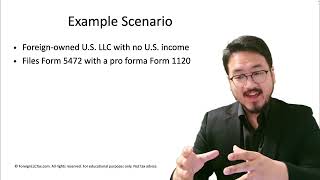
1:21No U.S. Income but Owner Funding? A Form 5472 Example
 2:20
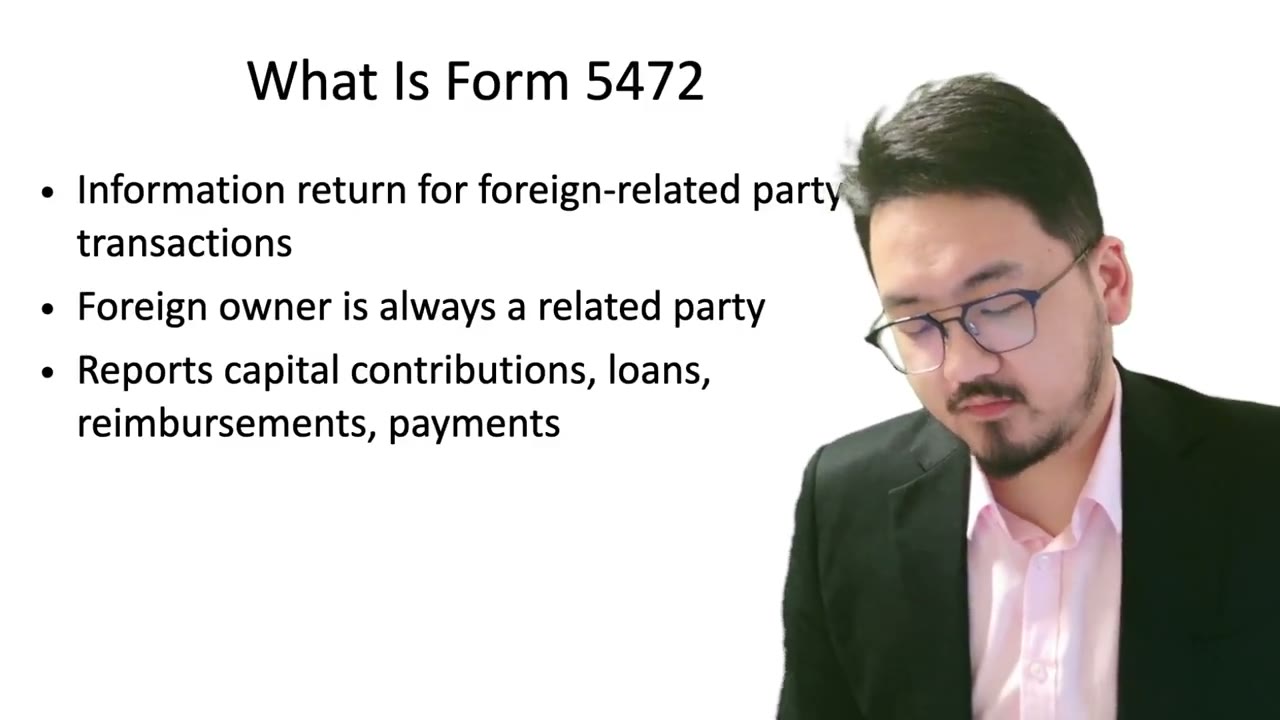
2:20Pro Forma 1120 + Form 5472: What Counts as a Reportable Transaction with Your LLC
Form 5472 Explained — What It Is, Who Must File, and How It Works
Form 5472 Explained: Who Must File and What Is Reportable (2026-2027)
 5:00
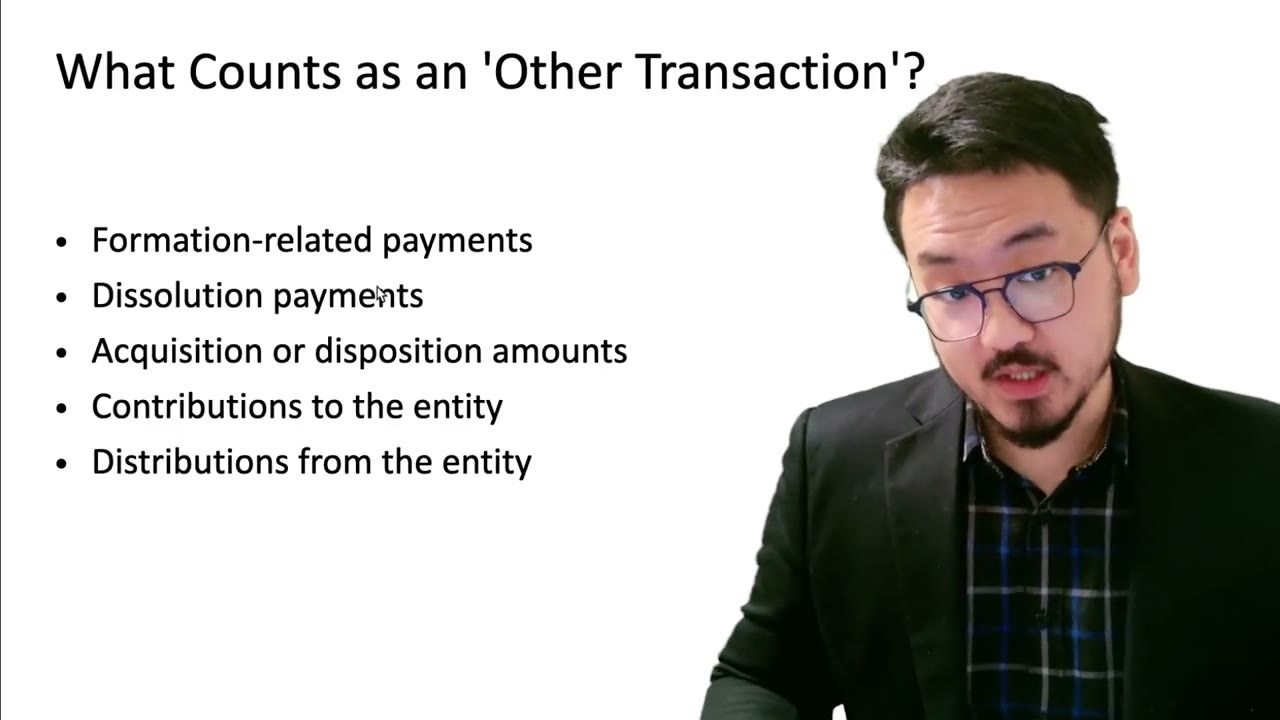
5:00Form 5472 Attachment: Capital Contribution vs. Loan, Distribution, Dissolution Payments
 5:15
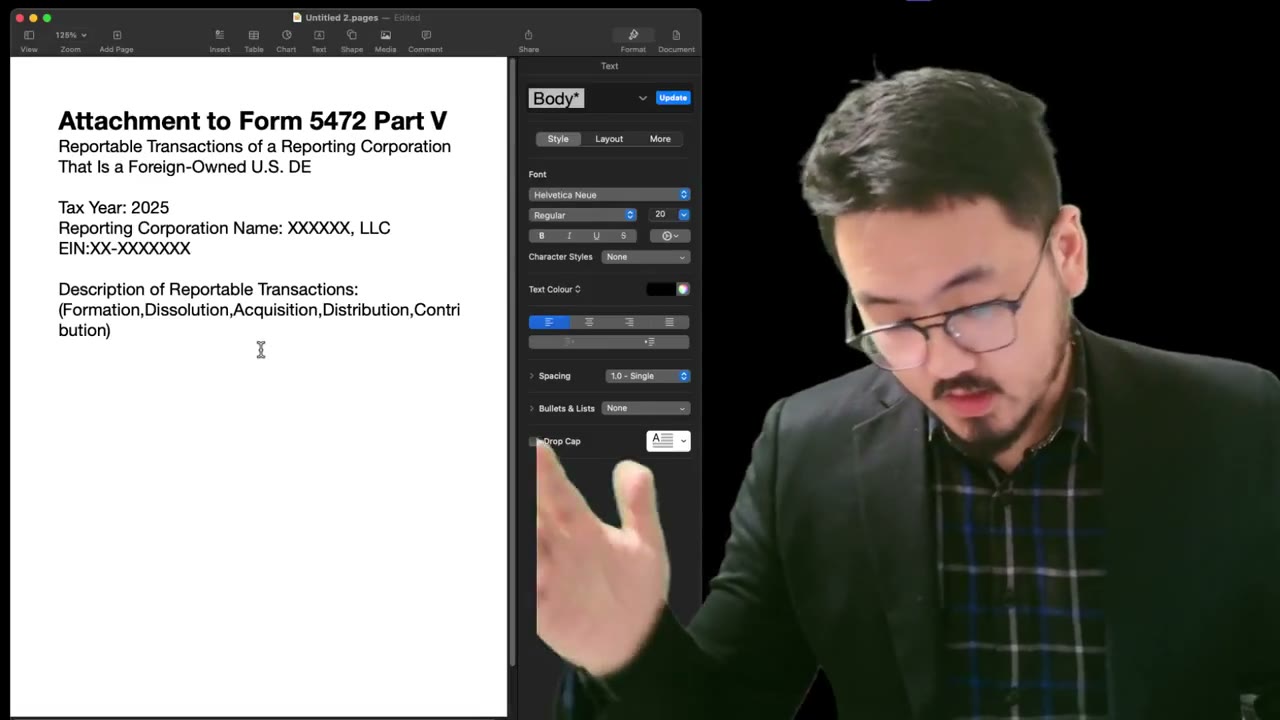
5:15Form 5472 Attachment: Sample Disclosure for a Formation-Only Year (Stripe Atlas)
Form 5472 Part VI — Do You Need a Statement About the Owner-Manager Relationship?